
Do You Need a Passenger Kit for a Cargo E-Bike?
How to decide whether passenger rails, seats, footrests, and kid-hauling accessories belong in your first cargo setup.
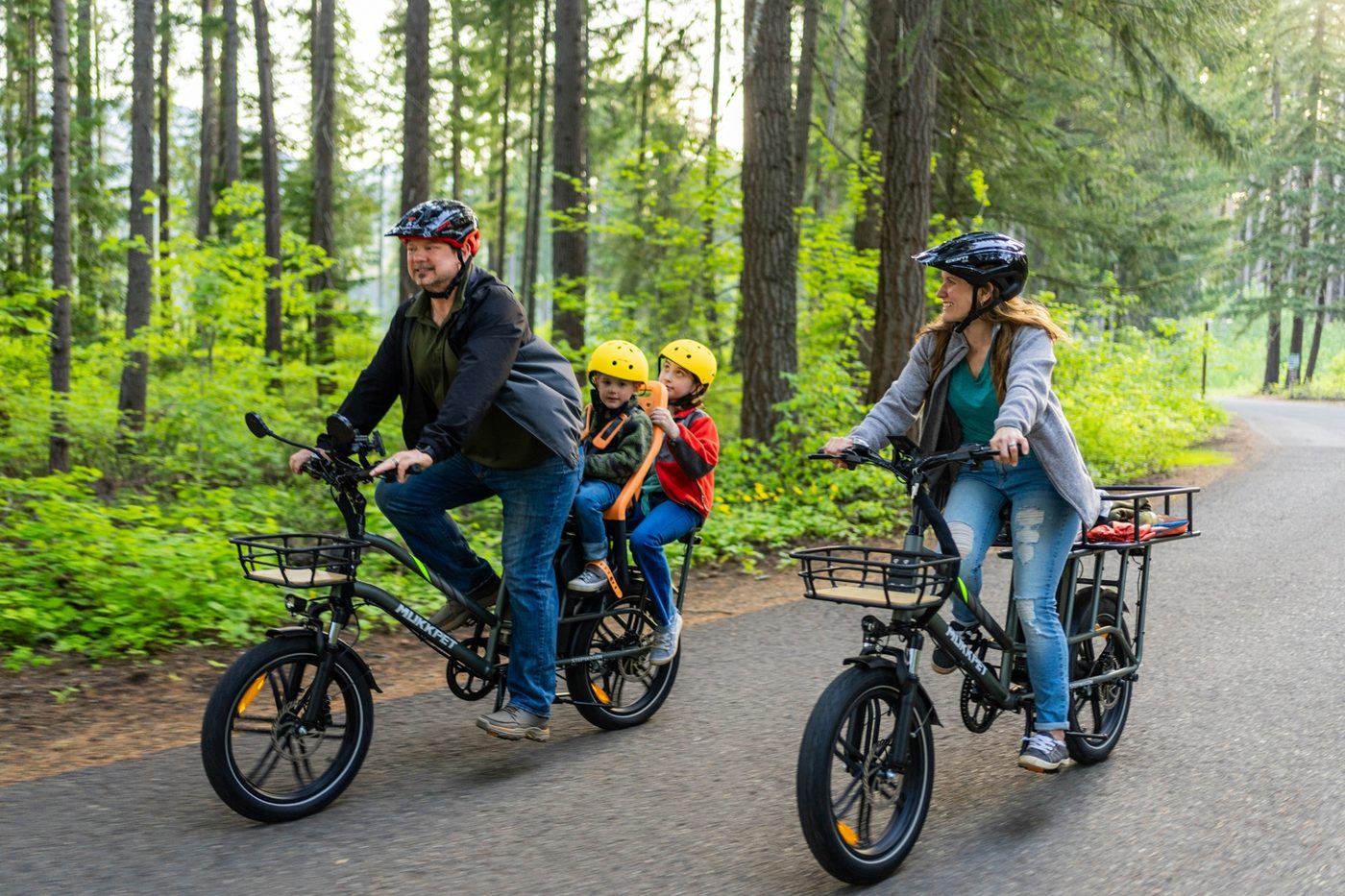
Editorial review note: This page is reviewed under ElectricBikeCompare's higher-risk passenger-safety standard. Use it alongside the official guidance for your exact bike, passenger kit, child seat, and local rules.
If you plan to carry a person on the back of a cargo e-bike more than occasionally, yes, you usually need a proper passenger kit. A rear rack weight rating by itself is not the whole answer. The passenger still needs somewhere secure to sit, somewhere safe to put their feet, and some protection from getting hands, feet, laces, or jackets into the wheel.
What a passenger kit is really solving
A good passenger setup turns “the rack can hold the weight” into “a person can actually ride back here with some security and predictability.” On family bikes, that usually means a combination of seat padding, footrests or running boards, side protection, and either rails or a child seat depending on the passenger's age and size.
Tern's current passenger system language is useful here because it shows what the category is trying to achieve: enclosed rails, dedicated seating, back support, and setups that can switch between kids and cargo depending on the day. That is a very different thing from tossing a cushion on a bare rack.
When you absolutely should budget for the full setup
- you are doing regular school or daycare drop-offs
- you will carry a larger child who is beyond a standard rear child seat but still needs stability
- your route includes stop-and-go traffic, bumps, curbs, or repeated starts on uneven pavement
- you want the passenger to get on and off the bike routinely without improvisation
- you need the bike to feel calm and repeatable, not “okay if everything goes right”
What usually belongs in a real passenger kit
- Seat pad or seat module: because a passenger perched on rack tubing gets old fast.
- Footrests or running boards: one of the most important pieces because dangling feet and rear wheels do not mix.
- Side protection or rails: helps prevent clothing, shoes, and small movements from turning into a wheel problem.
- Backrest or enclosure: especially helpful for older kids who are no longer in a child seat but are still passengers, not active riders.
- Compatible child seat where needed: younger kids often still need the seat first, not the “big kid” passenger pad setup.
Why “just add a pad” is usually the wrong shortcut
A pad solves comfort. It does not solve leg placement, side protection, mounting stability, or the chaos of getting a kid on and off the bike in front of school. That is why the partial setup often feels cheap only until the first week of real use. Then it starts feeling inconvenient or sketchy.
How age and passenger size change the answer
There is a big difference between carrying a toddler, a first-grader, and an older child who can sit still and follow instructions. Younger children often need a dedicated child seat. Older children may fit better in a passenger rail-and-pad system with foot support. The mistake is treating all kid-hauling as one category just because the rack can physically carry the weight.
Always follow the bike maker's passenger guidance and accessory compatibility rules. A cargo bike can be passenger-capable in general but still require very specific accessories for safe use.
Think about loading, not just riding
Most family frustration happens while loading at the curb, not cruising once everything is settled. A better passenger kit makes the daily routine easier in three ways:
- it gives the passenger a clear place to sit and put their feet
- it reduces the odds of fidgeting near the wheel
- it helps the rider repeat the same loading sequence every day
That is why the right accessories are not just safety gear. They are routine-management gear.
When you can skip it for now
- the bike is still doing groceries-only duty
- the passenger plan is hypothetical, not real
- you are still using a compatible child seat and do not yet need the next-stage setup
- you are intentionally waiting because you are not yet sure which kid-hauling configuration fits your family best
That said, if you already know the bike's main job is school runs or regular passenger carrying, it is better to budget for the passenger kit from day one than pretend the base bike price is the true cost.
Bottom line
Yes, most riders who regularly carry a passenger on a cargo e-bike need a real passenger kit. Not because brands love accessories, but because feet, balance, side protection, and daily loading all matter. If the passenger role is real, buy the bike as a system, not just as a frame and motor.
Sources used for this page
This page is based mainly on primary bike and accessory guidance. That includes official passenger-kit, payload, footrest, rail, seat-pad, and child-seat compatibility information from bike and accessory makers.