
How to Store an E-Bike in an Apartment
A practical guide to storing an e-bike in an apartment, with advice on weight, space, charging, and everyday ownership.
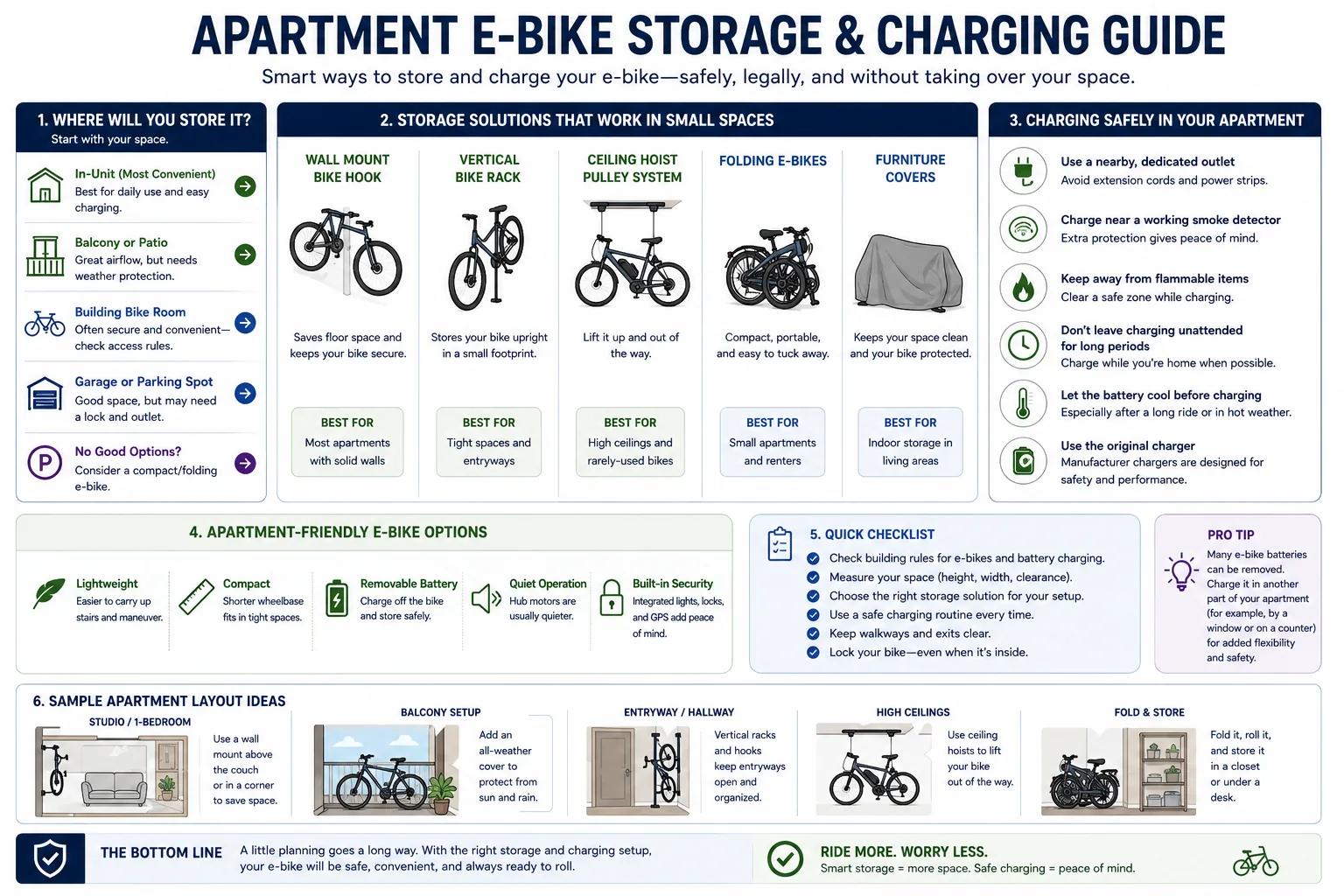
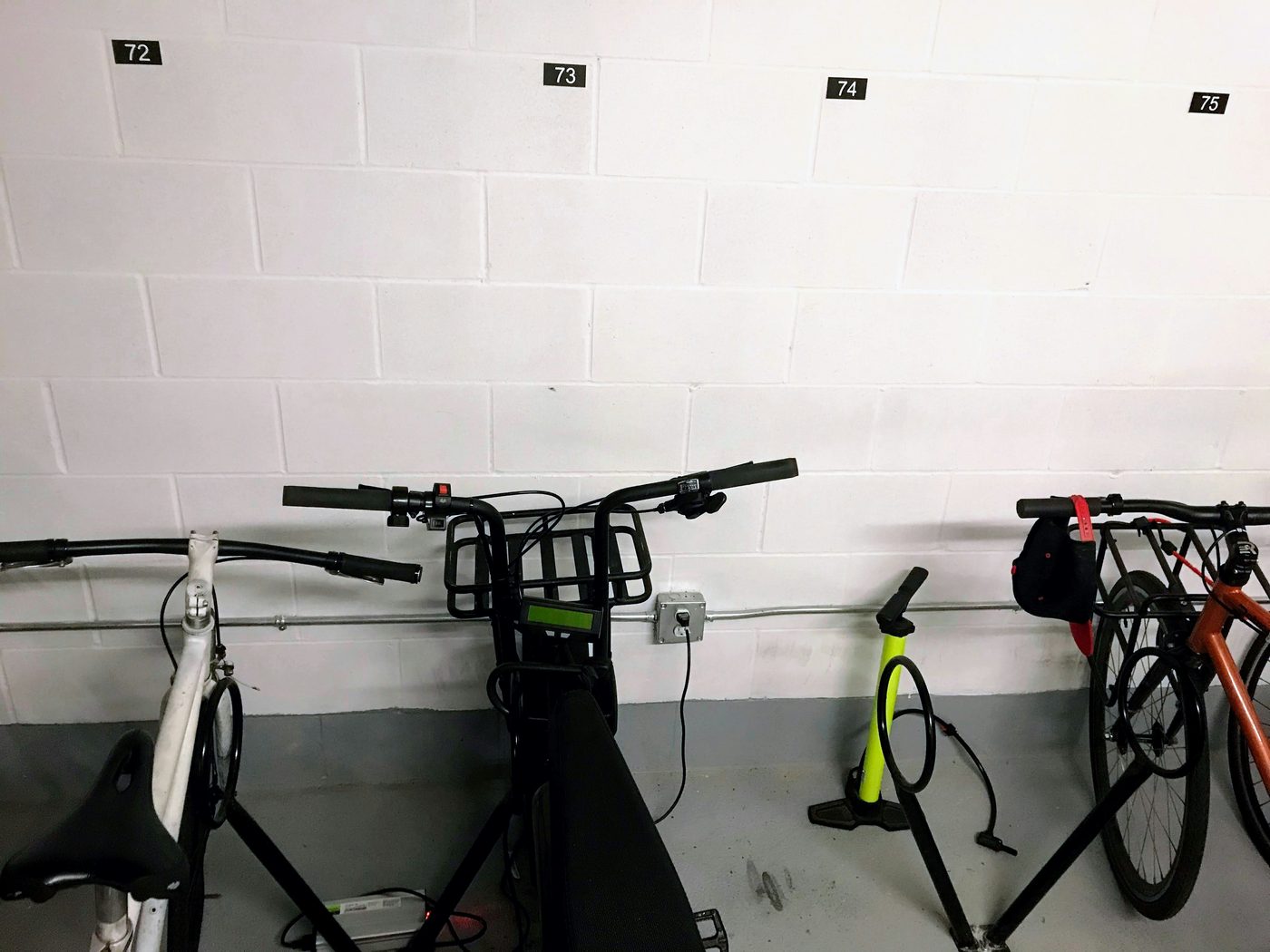
The short answer
Apartment storage works best when the bike can follow a repeatable indoor routine without drama. That means the bike fits through the door, turns where it needs to turn, parks somewhere stable, and charges without becoming a hallway obstacle or a nightly hassle.
Measure the real choke points
Most buyers measure the floor space and forget the route. Measure the front door opening, hallway turns, elevator width, and the place where the bike must pivot into its parking position. A bike that technically fits the room can still be a bad apartment bike if it fights the route getting there.
Best-case apartment setup
Ground floor or elevator access, near-entry parking, removable battery charging, and a bike you can roll the whole way.
Worst-case apartment setup
Walk-up stairs, narrow turns, no easy parking zone, wet tires crossing living space, and a bike heavy enough that you dread moving it.
What a good apartment storage routine looks like
- The battery comes off easily if indoor charging is part of the plan.
- The bike parks on the floor without blocking doors or circulation.
- You can get it inside quickly when tired, wet, or carrying other things.
- The charger location is sensible, dry, and not improvised every night.
What type of bike usually works best
Compact commuters, lighter utility bikes, and some folders tend to win apartment life because they reduce hassle. Very long cargo bikes, heavy fat-tire bikes, and bikes with awkward bar width often lose not because they are bad bikes, but because apartments punish bulk and awkwardness every single day.
Common apartment mistakes
- Buying for outdoor ride quality only and ignoring the indoor route.
- Assuming you will “get used to” carrying a heavy bike up stairs.
- Counting on shared hallway parking that may not stay practical or allowed.
- Forgetting the wet-weather reality of tires, fenders, and battery charging.
Apartment storage succeeds or fails on the worst day, not the best day
Almost any e-bike can fit inside an apartment once. The better test is whether you will still be happy doing it in the rain, after groceries, when the hallway is busy, or when you are late. That is why good apartment storage is less about theoretical footprint and more about doors, pivots, elevator timing, carrying distance, and whether the battery comes off fast enough to reduce lift weight.
Measure these three things before you buy
- Door and hallway pinch points: measure the narrowest turn, not just the front door width.
- Resting space: where will the bike actually sit without blocking coats, shoes, stroller flow, or a radiator?
- Battery routine: if the battery must come inside to charge, make sure that motion is easy enough to repeat weekly.
Apartment-friendly storage patterns
Best: bike rolls almost all the way to its resting place, battery removes easily, and the charger lives nearby. Good enough: one short threshold lift or one careful hallway turn, but no staircase carry every day. Usually bad: heavy fat-tire or cargo bike through a narrow hall, tight apartment corner, and frequent battery removal just to make the fit work.
When a bike is technically storable but practically wrong
If you need to remove the battery, fold pedals, twist the bar, and lift a 65 to 75 pound bike every single day, the storage solution is not really solved. That setup can be tolerable for occasional use and miserable for daily commuting. Apartment buyers should be ruthless here: an easier bike that gets ridden is better than a more capable bike that feels like furniture-moving.
Think in parking routine, not just square footage
Apartment storage works better when you picture the full sequence: open the door, roll or carry the bike in, clear pedals and bars, place the charger, remove the battery if needed, and leave enough room to walk. That routine is where buyers discover whether a bike is truly apartment-friendly. A bike that technically fits but creates a clumsy nightly ritual is still a bad fit. Removable batteries, narrower bars, stable kickstands, and easier wheel alignment often matter more than one more storage gadget.
Bottom line
The best apartment storage setup is the one you can repeat half-asleep on a rainy night. Choose the bike and parking routine that reduce lifting, turning, and charger hassle, not the one that only looks manageable in an empty room.
Still narrowing the apartment shortlist?
Use these pages to figure out whether your better answer is lighter, foldable, or simply less ambitious overall.